

Why am I getting traffic but no leads
Getting people to visit your website is a big win. It means your marketing is working; people are finding you. But here’s the tricky part: what if all that traffic doesn’t lead to anything? No one signs up, no one books a call, no one buys. Suddenly, those numbers don’t feel so exciting anymore.
This often happens to many businesses. Attracting visitors is one thing, but turning those visitors into real leads and customers is an entirely different challenge. Think of it like hosting a party; people show up, but if they don’t feel welcome, they won’t stay long enough to connect.
The good news is? There’s always a reason behind it. And when you know what’s blocking people from taking action, you can fix it.
In this guide, I’ll walk you through 40 clear reasons why your website might be getting traffic but no leads and how you can turn things around.
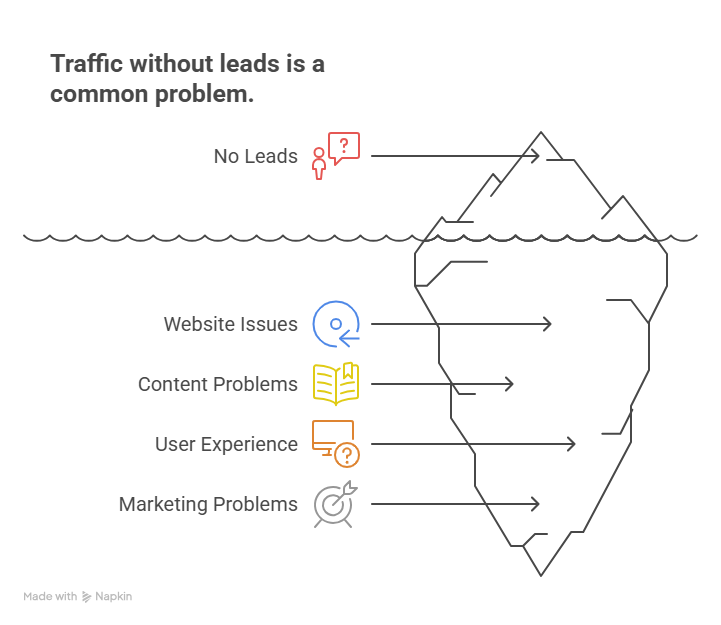
1. Website & User Experience Issues
1. Slow Website Speed
I’ve seen this happen so many times when a website takes too long to load, people just don’t wait. They click away and move on. Honestly, would you stay on a page that keeps spinning? Probably not.
A slow website doesn’t just annoy visitors, it also hurts trust and can cost you leads and sales. Even a few extra seconds make a big difference.
The good news is, you can fix it. Compress your images, choose a reliable hosting service, and keep your site clean by avoiding excessive content. A fast website feels smooth, keeps people on your page, and gives them a reason to stay longer.
2. Poor Mobile Optimization
Most people today browse the internet on their phones. If your website doesn’t look good or work smoothly on mobile, you’re instantly losing a big part of your audience. Visitors won’t zoom in, scroll awkwardly, or struggle to click tiny buttons; they’ll just close your site and move on to one that feels easier.
A mobile-friendly website adjusts automatically to smaller screens, loads quickly, and keeps everything clear and clickable. It means text is readable without zooming, images fit correctly, and forms are easy to fill out.
Good mobile optimization not only enhances user experience but also contributes to improved Google rankings. Search engines favor mobile-friendly sites, so if yours isn’t optimized, you’re missing out on both visitors and conversions.
3. Confusing Navigation
If visitors can’t find what they’re looking for in just a few clicks, they’ll leave your site. A confusing menu, too many options, or hidden pages make people frustrated. Remember, no one wants to “figure out” how your website works; they expect it to be simple.
Good navigation is all about guiding visitors. Your menu should be straightforward, easy to read, and focused on the most critical pages, such as services, pricing, contact information, or the shop. Adding a search bar can also help people quickly locate what they are looking for.
When navigation is smooth, visitors spend more time exploring and are more likely to take action. But when it’s messy, you lose them before they even discover what you offer.
4. Too Many Distractions
Pop-ups, auto-play videos, and flashy banners, if all of these appear at once, your visitors won’t know where to focus. Instead of paying attention to your main offer, they’ll feel overwhelmed and leave.
A website should have one clear goal on each page. For example, if the goal is to get sign-ups, everything else should support that action, not compete with it. Too many distractions take away from the message you want people to see.
Keep things clean and focused. Use visuals, text, and calls-to-action in a way that naturally guides visitors through your content. The less noise, the easier it is for them to do what you want, whether that’s booking a call, signing up, or making a purchase.
5. Weak Design & Branding
First impressions matter. When someone lands on your website, they instantly decide whether to trust you or not, often just by looking at the design. If your site appears outdated, messy, or inconsistent, people may perceive your business as unprofessional or unreliable.
Strong branding means that your colors, fonts, and style all work together to create a clear and cohesive identity. It also means your design feels modern, clean, and visually appealing. A well-designed site builds trust, demonstrates professionalism, and instills confidence in visitors to work with you.
On the other hand, weak design and branding make your site forgettable. Visitors might leave without even reading what you offer. A polished, consistent look helps you stand out and keeps people engaged long enough to take action.
6. Broken Links or Errors
Nothing turns visitors away faster than clicking a link and landing on an error page. Broken links, missing images, or pages that don’t load properly make your website look unprofessional and unreliable. People might think, If they can’t manage their site, how can I trust their services or products?
A smooth website experience means every link should take visitors exactly where they expect to go. Regularly checking for broken links, fixing error pages, and keeping content up to date demonstrates that your business is active, trustworthy, and up-to-date.
Even minor errors can cost you leads because they interrupt the flow. When everything works the way it should, visitors stay focused on your content and are more likely to take the next step with you.
7. No Clear Conversion Path
Think of your website like a shop. People walk in, look around, and then there’s no cashier, no signs, no help desk. What happens? They walk right back out. That’s exactly what happens online when your site doesn’t guide visitors toward the next step.
A clear path isn’t about stuffing buttons everywhere; it’s about creating a smooth journey. If someone’s on your services page, lead them to book a call. If they’re reading your blog, offer them something extra, like a free checklist or guide. Each page should feel like a gentle nudge forward, not a dead end.
When visitors know precisely what to do next, they’re far more likely to take action. Without that guidance, even the best traffic just drifts away.
8. Too Much Text, No Visuals
Reading a website that’s only text feels like staring at a wall of words. People online don’t read the way they read books; they scan. If there’s nothing to break the flow, their eyes get tired, and they leave.
Visuals act like road signs. Images, icons, and graphics guide visitors, highlight key points, and make the content easier to digest. Even simple elements, such as bullet points, infographics, or short videos, can turn heavy text into something people want to explore.
It’s not about decorating the page. It’s about helping your message land. A single image can explain what a whole paragraph struggles to say. Without visuals, your content feels flat. With them, your story becomes clear and memorable.
9. Slow Forms or Checkout
Think of checkout like the finish line of a race. Someone runs all the way, full of energy, ready to cross, and then the gate is stuck. That’s what a slow form of checkout feels like. People are prepared to sign up or make a purchase, but instead, they get stuck typing endless details or waiting for pages to load.
No one wants to fill in 10 boxes just to get a free guide. No one wants to re-enter their information three times to make a purchase. The longer it takes, the faster they quit.
Keep it quick. Keep it smooth. The easier you make it to complete, the more people will finish, and that’s where the win happens.
10. Not Accessible
If your website isn’t accessible, some visitors may be unable to use it and leave immediately. Simple things, such as clear fonts, good color contrast, alt text for images, and easy-to-use buttons, make your site usable for everyone.
An accessible website builds trust, brings more visitors, and even helps with SEO. It’s not just kind, it’s smart for business.
2. Content & Messaging Problems
11. Wrong Audience Reading Your Content
Getting traffic is beneficial, but if the wrong audience reads your content, it won’t yield results. You might see clicks, but no one buys or signs up.
The solution is straightforward: identify your ideal audience. Write for their needs, problems, and goals. When the right people read your content, they’ll connect with it and take action.
12. Clickbait Titles, Weak Value Inside
A catchy headline may grab attention, but if the content doesn’t deliver real value, people lose trust fast. They click once, feel disappointed, and never come back.
Instead of tricking readers, focus on honesty. Write titles that match your content and give people what they expect. When your content is valuable and straightforward, readers stay longer, trust you more, and are more likely to return.
13. Unclear Value Proposition
If people can’t quickly understand what you offer and why it matters, they’ll leave. Visitors don’t have time to guess how your product or service helps them.
Your value proposition should be simple: what you do, who you help, and why you’re different. When people instantly see the benefit of choosing you, they’re more likely to stay, trust, and take action.
14. Content Not Solving Real Problems
People come to your content because they want answers. If what you write doesn’t solve their problems, they won’t stick around. Maybe they’ll read once, but they won’t come back, because it didn’t help.
That’s why your focus should always be on your audience’s real struggles. Discuss the issues they face and provide them with practical steps or tips they can apply immediately. When your content feels useful, people remember you, trust you, and are far more likely to become long-term followers or even clients.
15. Too Much Selling, No Teaching
If every piece of content only tries to sell, people quickly lose interest. Nobody wants to feel like they’re just being pushed to buy.
Instead, teach first. Share tips, insights, and valuable information that helps your audience. When people learn from you, they begin to trust you, and that trust makes selling easier later.
16. Not Enough Social Proof in Content
Even if your website looks great and your content is helpful, visitors often hesitate to take action if they don’t see proof that others trust you. Testimonials, reviews, case studies, or client logos show that real people or businesses have benefited from your products or services.
Without social proof, your claims may seem hollow, and visitors might leave unsure about the reliability of your solution. Including authentic feedback and success stories helps build credibility, reassures your audience, and increases the likelihood that they will engage, sign up, or make a purchase.
17. Content Not Actionable
Content that only shares information without guiding visitors on what to do next often falls flat. Even if someone finds your advice interesting or insightful, they may leave the website without taking any meaningful action because they’re unsure how to apply it.
Actionable content provides your audience with clear steps, tips, or instructions that they can implement immediately. For example, instead of just explaining a concept, show them exactly how to use it, try it, or apply it to their situation. This approach not only helps visitors see real results but also builds trust in your expertise.
When content is actionable, it motivates people to engage further, whether that means signing up for a newsletter, booking a consultation, downloading a resource, or making a purchase. It turns passive readers into active participants, which directly impacts your leads and conversions.
18. Old or Outdated Content
Even high-quality content can lose its impact if it’s outdated. Statistics change, trends evolve, and best practices improve over time. When visitors encounter old information, they may question whether your business is active, knowledgeable, or trustworthy.
Regularly updating your content ensures that it stays accurate, relevant, and valuable. Refresh outdated statistics, add new examples, and adjust recommendations to reflect current trends. It not only helps retain visitor trust but also improves your search engine rankings.
Keeping your content current shows that your business is active, informed, and reliable, which encourages visitors to engage, take action, and see you as an authority in your field.
19. Irrelevant Blog Topics
Blogging can attract visitors, but only if the topics are relevant to your audience. Writing about subjects that don’t relate to your products, services, or your audience’s needs may bring traffic, but it won’t lead to engagement, trust, or conversions.
Irrelevant content can confuse visitors and make your brand seem disconnected from their needs. Instead, focus on topics that solve real problems, answer common questions, or provide insights your audience cares about.
When your blogs are aligned with your audience’s interests, they engage more, spend time exploring your website, and are more likely to take action, whether that’s subscribing, booking a consultation, or purchasing a product.
20. No Personalization
A website that treats every visitor the same misses a huge opportunity. People respond better when content, offers, or messages feel tailored to their needs, interests, or stage in the buyer journey. Without personalization, visitors may feel like just another number and fail to engage.
Personalization can be as simple as displaying relevant blog posts, recommending products based on user behavior, or greeting returning visitors by name. It makes the experience more relevant and helps visitors connect with your brand on a deeper level.
When visitors feel understood, they are more likely to trust your business, engage with your content, and take meaningful actions such as signing up, booking a call, or making a purchase.
3. Calls-to-Action (CTA) Mistakes
21. Weak or Generic CTAs
Even if your content is strong, weak or generic calls-to-action (CTAs) can prevent visitors from taking the next step. Phrases like “Click here” or “Submit” don’t clearly explain what the visitor will receive or why they should take action.
A good CTA is clear, specific, and shows value. For example, phrases like “Download Your Free Guide” or “Book a 15-Minute Strategy Call” clearly inform visitors of the following steps and what they can expect to gain.
Strong CTAs guide visitors, make decisions easier, and increase the chances that they will engage, sign up, or make a purchase.
22. Too Many CTAs on One Page
Having too many calls to action on a single page can confuse visitors. When people see multiple buttons or prompts, they may not know which action to take and could leave without taking any action.
Each page should focus on one main goal. All CTAs should support that goal and guide visitors clearly toward the next step. Keeping your calls-to-action focused increases engagement and improves the chances that visitors will take action.
23. No CTA Above the Fold
If your main call-to-action (CTA) is buried too far down the page, visitors may leave before seeing it. People often decide quickly whether to stay or go, so placing a clear CTA near the top ensures they notice it immediately.
Having a visible CTA above the fold guides visitors from the start and increases the chances that they will engage, sign up, or take the desired action. It sets the direction for the rest of their journey on your site.
24. Unclear Offer
If visitors cannot quickly understand what you are offering or how it benefits them, they will likely leave your website. A confusing offer only leaves visitors unsure and less likely to trust you.
Your offer needs to be clear, specific, and show real value to the visitor. Explain what they’ll get, why it’s essential, and how it solves their problem.
A clear offer makes it easier for people to take action, whether that’s signing up, engaging with your content, or making a purchase.
25. CTAs Not Aligned With Content
Imagine reading a blog with helpful small business tips, only to find a button at the end promoting something unrelated to the content.
It feels out of place and makes you question the value of the advice you just read.
Calls-to-action should flow naturally from the content, guiding visitors to the logical next step. When the CTA aligns with the content, it feels supportive rather than pushy. When visitors see the benefit, they’re more likely to take the next step, whether that’s signing up, booking a call, or making a purchase.
26. Overcomplicated Forms
Imagine trying to sign up for a service and encountering a form that requests excessive information. It can feel overwhelming. Most visitors become frustrated and leave before completing their visit.
Forms should be simple and only ask for what’s truly needed.
The easier it is to fill out a form, the more likely visitors are to complete it. Clear and concise forms make the process smooth, build trust, and increase the chances of turning visitors into leads or customers.
27. Lack of Immediate Action in CTA
You find an offer on a website, but it doesn’t urge you to act right away. Without an apparent reason to take immediate action, visitors can easily postpone or leave the page without explanation.
Effective CTAs create a sense of urgency, such as limited-time discounts, exclusive offers, or special bonuses. When visitors feel there’s a real opportunity they might miss, they are more likely to engage, sign up, or make a purchase immediately.
28. CTA Buttons Hard to Notice
Calls-to-action (CTA) that blend into the page or are challenging to spot can be easily missed by visitors. If people can’t see where to click, they may leave without taking any action, no matter how good your content is.
CTA buttons should be visually distinct and easily identifiable. Use contrasting colors, clear text, and strategic placement to help visitors immediately understand the next step. When CTA buttons are noticeable and easy to interact with, engagement and conversions increase significantly.
29. No Trust Signals Near CTAs
Even a clear call-to-action fails when people lack confidence in taking the next step. Without trust signals such as testimonials, reviews, secure payment icons, or guarantees, people may hesitate to engage.
Placing trust elements near your CTAs reassures visitors that your offer is reliable and safe. When visitors feel secure, they are more likely to click, sign up, or make a purchase.
30. Lack of Testing Different CTAs
If you continue using the same call-to-action (CTA) without trying different options, you may miss opportunities to achieve better results from your website. Different wording, colors, or placement can significantly impact how visitors respond.
Testing multiple versions of your CTAs (A/B testing) helps identify what works best for your audience. The more you try different ideas and see what’s working, the better your CTAs will get. Over time, you’ll notice more people clicking, engaging, and taking action.
4. Audience Targeting & Traffic Quality
31. Attracting the Wrong Audience
Getting traffic on your website can be exciting, but what if those people aren’t the right fit for your business? You may see big numbers, but no one signs up, no one buys, and no one engages. That’s when all the effort feels wasted.
It typically occurs when your content, ads, or campaigns are targeting the wrong audience. They land on your website, realize it’s not for them, and leave immediately.
The solution? Stop chasing random clicks. Focus on your ideal audience, people who purchase your product or service. Take time to understand their problems, goals, and what they’re searching for. Then create content and run campaigns that speak directly to them.
When the exemplary visitors come, they’ll stay longer, trust your brand, and take action because your message is precisely what they’re looking for.
32. Focusing on Traffic That Doesn’t Convert
Seeing more traffic on your website can be a great feeling.
But traffic alone doesn’t guarantee success.
If those visitors aren’t interested in what you offer, the numbers won’t turn into tangible results.
Visitors who don’t match your offer will scroll, leave, and never return.
That’s why more traffic isn’t the goal; the right traffic is.
The goal isn’t just to get more visitors, it’s to bring in the right ones. When the right audience lands on your site, they’re more likely to engage, join your list, or make a purchase. That’s how traffic turns into real growth for your business.
33. Too Much Freebie-Seeking Audience
Offering free resources is excellent, but sometimes your website may attract people who are only interested in freebies and not in your products or services. These visitors can drive up traffic numbers but rarely convert into paying customers.
The key is to balance free offers with content that highlights the value of your paid products or services. Make it straightforward for your ideal audience and create resources that attract people genuinely interested in what you offer. When you draw the right audience, they’re more likely to engage, trust your brand, and eventually take the next step toward becoming a customer.
34. Paid Ads Targeting Wrong Interests
Running paid ads can bring visitors fast, but if your ads target the wrong interests and audience, you’ll attract people who aren’t genuinely interested in your products or services. You waste your leads to wasted ad spend and low engagement.
To address this, ensure your ads are tailored to your ideal audience. Utilize precise targeting based on their specific needs, interests, and behaviors. When your ads reach the right people, you’ll get better engagement, more qualified leads, and a higher return on your investment.
35. SEO Traffic With Low Buying Intent
Getting visitors from Google is exciting, but not all traffic leads to results. Sometimes people find your site while just browsing, researching, or looking for free information. They visit, read, and leave without taking any action.
The main issue is intent. High traffic doesn’t always mean high conversions. To get visitors who are more likely to become customers, focus on keywords and content that match what people are ready to do. For example, instead of targeting web design, aim to hire a web designer for a small business.
When your SEO focuses on visitors with real buying intent, your traffic becomes more meaningful, and more people take the next step toward becoming customers.
36. No Segmentation of Visitors
Every visitor on your website is different. Some are simply browsing, some are comparing options, and a few are ready to make a purchase. If you treat them all the same, your message feels too general, and most people leave without taking action.
Segmentation is about understanding these differences. A new visitor may want a quick “getting started” guide, while someone returning might be more interested in pricing, offers, or case studies.
You can also segment based on factors such as behavior, location, or origin. When people see content that fits their needs, they feel understood and that makes them more likely to sign up, book a call, or make a purchase.
37. No Retargeting Strategy
Most people visit your website once and then leave without taking any action. If you don’t have a retargeting plan, you lose those visitors forever. And the Thes, most people need to see you multiple times before they trust you enough to buy or sign up.
Retargeting is like giving a gentle reminder. When someone leaves your site, you can show them your ads again on social media or Google. It keeps your business at the forefront of their mind and encourages them to come back.
Without retargeting, you’re only relying on first-time visitors, and that rarely works. However, with a smart retargeting strategy, you can build trust incrementally and increase the chances of converting those visitors into leads and customers.
38. Not Nurturing Leads
Most people think getting a lead means the job is done. However, the truth is that if you don’t stay connected, people will forget you. A lead today doesn’t mean a customer tomorrow; it needs care and consistency.
For example, someone signs up for your newsletter. If you only send them one welcome email and then never follow up, they’ll lose interest. However, if you consistently share helpful tips, client stories, updates, or even a special offer, they’ll remember you and start trusting your brand.
Leads are like relationships; you can’t build them in one day. You need to provide value, remain consistent, and demonstrate to people that you are here to assist them. That’s when leads turn into loyal customers.
39. No Relationship Building
Conversions typically don’t occur after a single visit. People need to feel connected to your brand before they’re ready to take action. If your strategy only chases clicks and ignores relationships, you’ll miss the chance to turn visitors into loyal customers.
Building relationships takes consistency. That means sharing valuable insights, engaging with people on social media, responding to their questions and comments, and creating content that genuinely helps them. Over time, these small actions build trust, and trust is what leads to long-term customers.
When people feel that your brand understands and values them, they’re far more likely to choose you when it’s time to make a purchase.
40. Expecting Quick Wins
Getting traffic doesn’t mean sales will happen right away. Traffic is just the start. People need trust, value, and time before they choose you.
Visitors don’t become customers at this time. It takes time to become a customer. You must continue to show up, share content that helps, prove you’re trustworthy, and build genuine connections along the way.
Think of it like planting seeds. You don’t get a harvest the next morning. However, when you provide those seeds with the proper care and patience, they will grow stronger. With the same method, and with considerable effort, you can transform your visitors into loyal customers who trust and choose you.
Final Thoughts
Getting traffic is only half the job. If those visitors aren’t turning into leads or customers, something in the process is missing, whether it’s your website design, your content, your CTAs, or even the type of audience you’re attracting.
The good news is, these problems are fixable. Go through each of the 40 issues we discussed, one step at a time. Make your site easier to use, share content that helps people, add trust signals, and guide visitors with clear calls to action. Don’t forget to segment, retarget, and nurture your audience so they stay connected even after leaving your site.
When you put all these pieces together, your website stops being just traffic and starts becoming a place where visitors feel confident enough to take action, and that’s how you turn clicks into loyal customers.
Want help turning your website traffic into real leads and customers?
Book your free 30-minute strategy call with me, Madeeha Wali, at BrightXSearch today. Together, we’ll create a clear, tailored plan to grow your business.